
Matcha, explained
What exactlyis matcha?
You might already know the answer.
“It's green tea powder.”
Technically, yes.
But that answer is boring.
Because when we first heard about matcha, we wondered the same thing:
Why are people paying so much for green powder?
And why has Japan taken it so seriously for hundreds of years?
So we started digging.
That was when matcha became much more interesting to us.
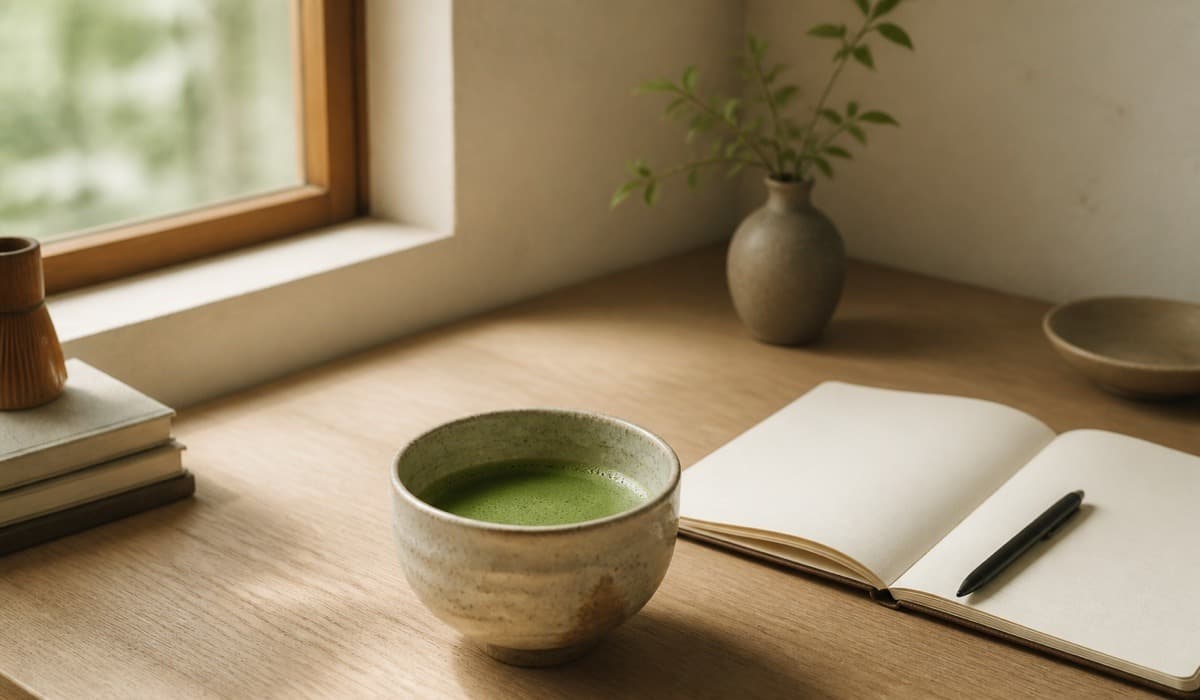
Origin
First question.
Where did matcha come from?
Matcha did not begin in a modern café.
Tea travelled from China to Japan centuries ago. Over time, Japan developed its own deep relationship with tea.
One group became particularly connected with it:
Zen monks.
That immediately made us curious.
Why were monks drinking tea?
They spent long hours meditating—and staying awake and attentive for that long was not easy.
So tea became part of their routine.
Think about it:
Coffee to survive meetings.
Tea to remain attentive during meditation.
A timeless question
Different century. Different setting. Same basic question:
How do I stay awake and continue what I'm doing?

Then tea became something bigger.
It was no longer only monks drinking it.
Tea gradually became popular among warriors, leaders and tea masters.
Eventually, preparing tea became a ritual.
It was not simply:
Add powder. Add water. Drink.
The bowl mattered.
The preparation mattered.
The way you sat mattered.
Even the silence mattered.
And that was one of the first things we genuinely liked about matcha.
It isn't only something you drink. It asks you to slow down for a few minutes.
The process
But wait.
How is matcha actually made?
This part surprised us. We assumed people simply grew green-tea leaves, dried them, ground them and called the result matcha.
Not exactly.
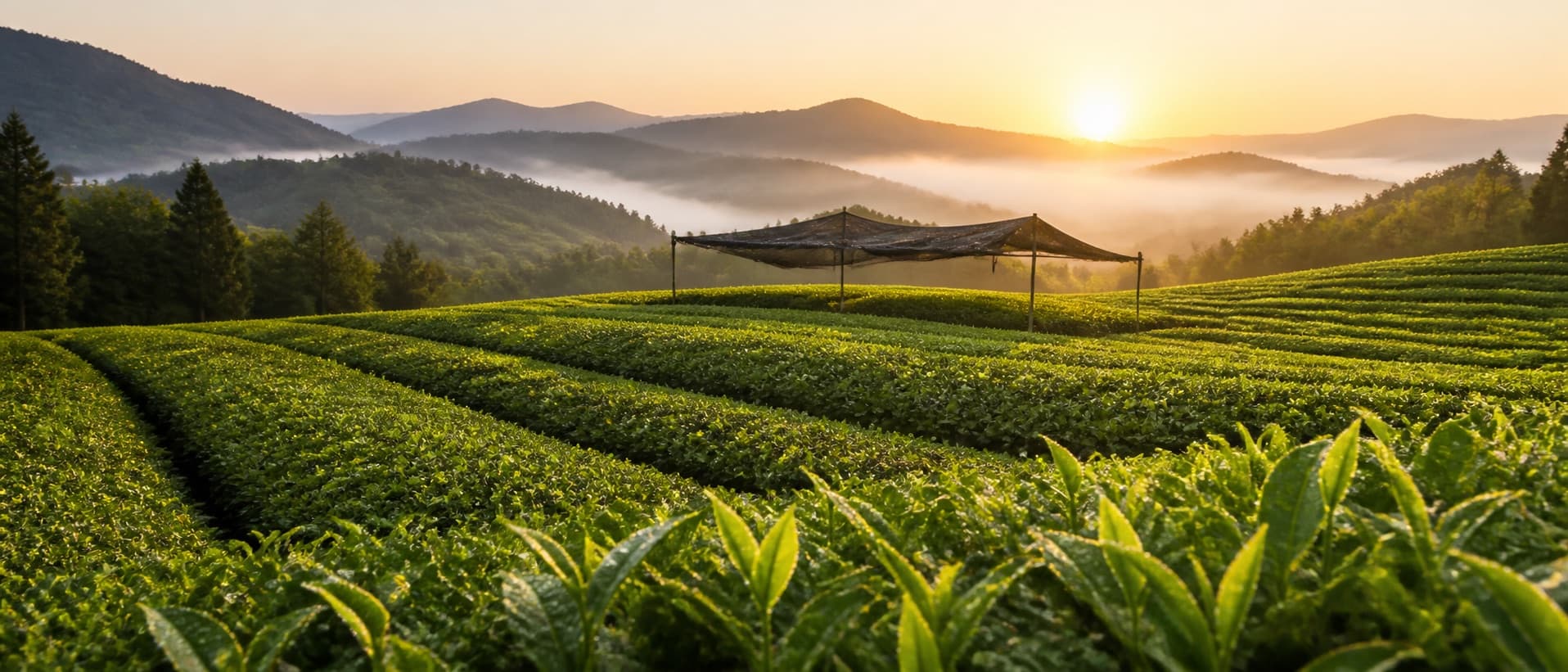
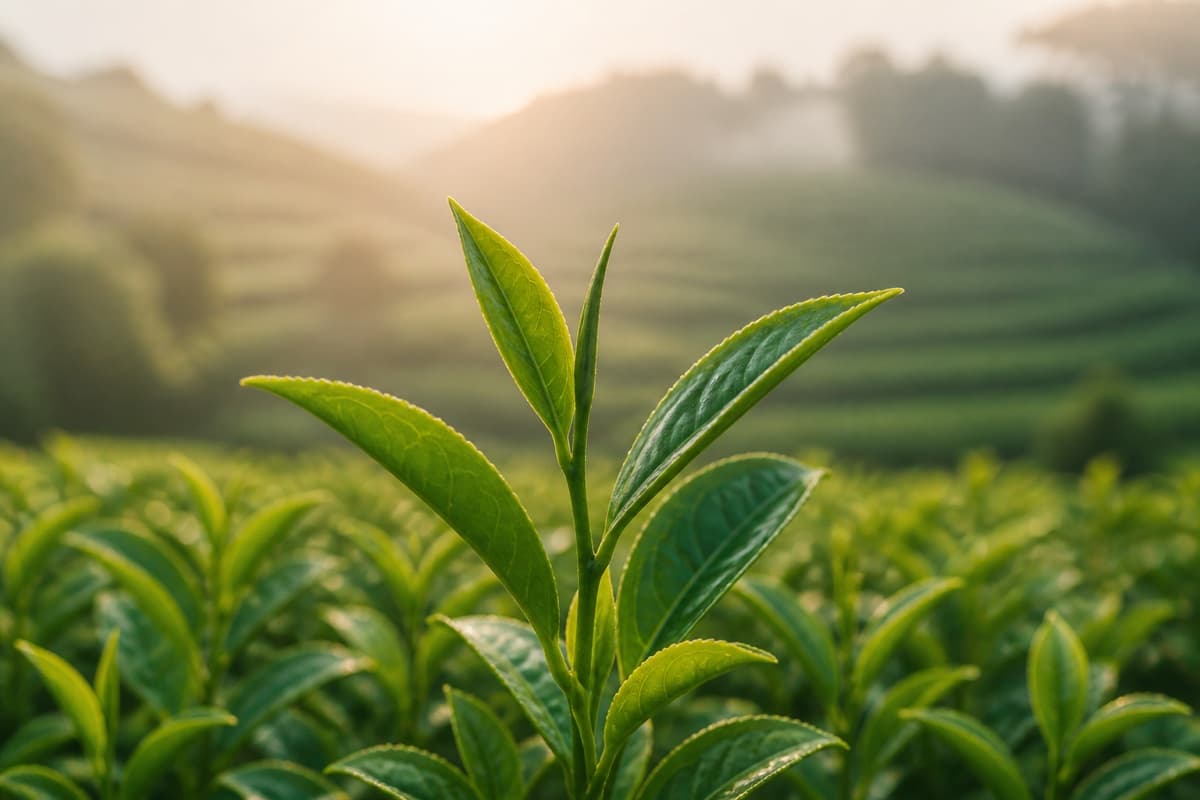
Before harvest, tea plants intended for matcha are shaded for a period of time. Less sunlight reaches the plants, changing the way the leaves grow. Their colour deepens. Their flavour develops. Their composition changes.
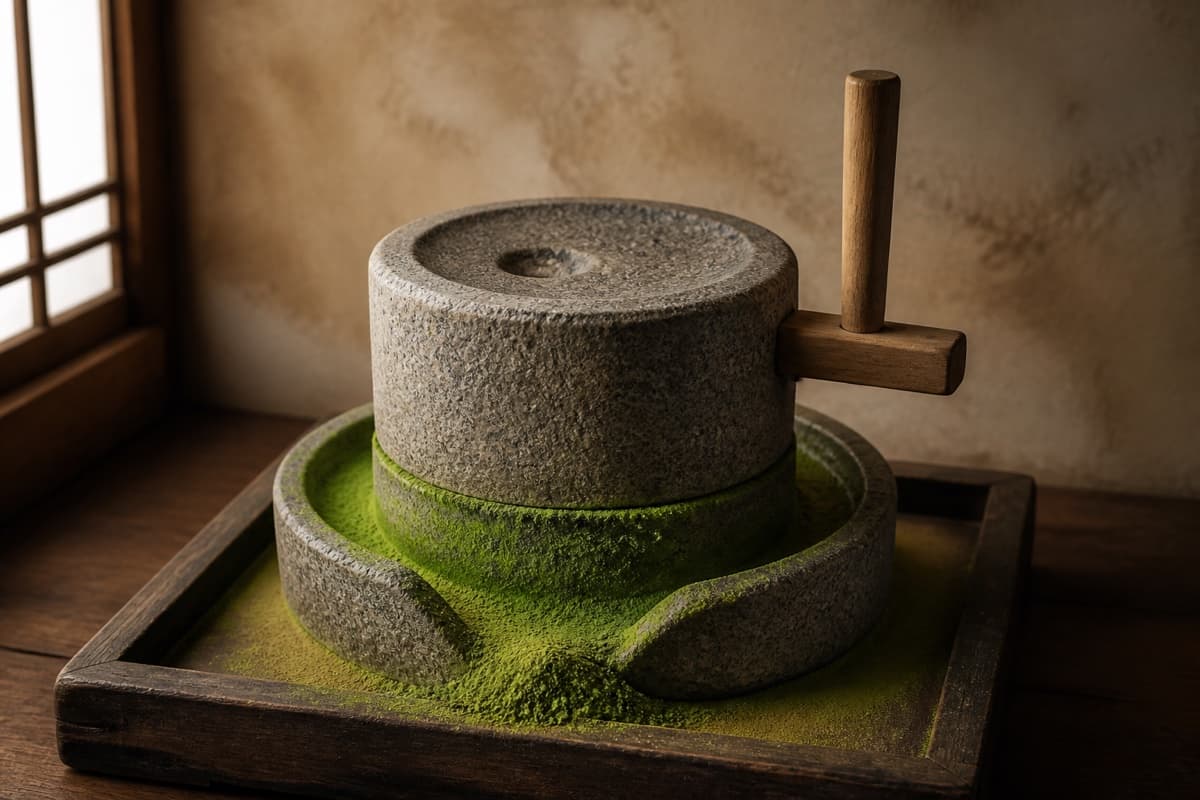
The leaves are then harvested, steamed and dried. The stems and tougher parts are removed. What remains is called tencha. The tencha is slowly ground into an extremely fine powder.
That powder is matcha.
So the green powder in your bowl began its journey long before it reached the grinder.
Shade-grown
Covered before harvest to reduce direct sunlight.
Harvested
Tender leaves are carefully collected.
Steamed
Heat is used quickly to protect the leaf.
Dried
Moisture is removed before refinement.
Refined into tencha
Stems and tougher parts are removed.
Stone-ground
Tencha is slowly milled into fine matcha.
The leaf
Here is what makes it truly different.
With matcha, you drink the leaf.
When you prepare ordinary tea, you place the leaves in water.
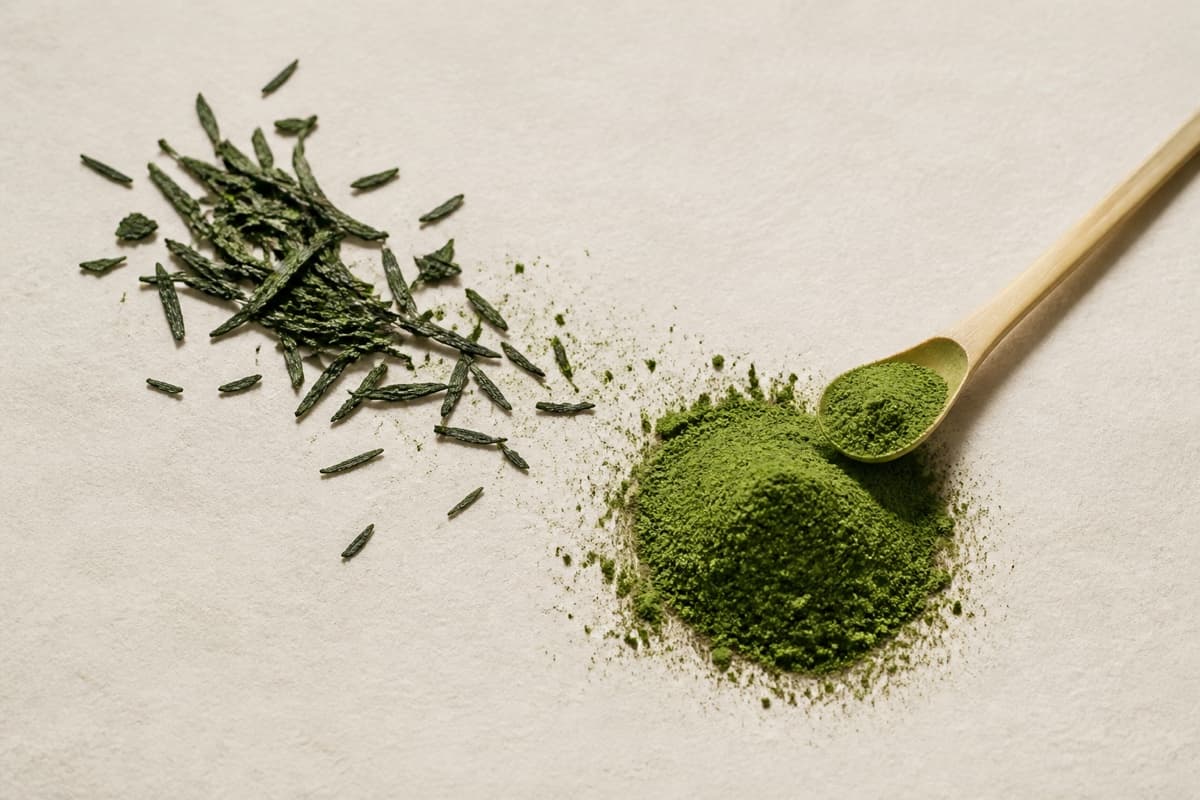
Ordinary tea
You wait.
You remove the leaves.
Then you drink the infused water.
Matcha
Matcha works differently.
The tea leaf is ground into a very fine powder. You whisk that powder into water and drink it.
You are not only drinking water infused with the leaf.
You are consuming the powdered leaf itself.
That is one of the most important differences between matcha and ordinary green tea.
The feeling
Now for the phrase everyone uses.
What is “calm energy”?
We wanted to understand this too.
Because, honestly, calm energy sounds like something invented by a marketing team.
How can something make you feel awake and calm at the same time?
Matcha naturally contains caffeine.
So yes, it can help you feel more alert.
Tea also naturally contains an amino acid called L-theanine.
You do not need to memorise the scientific name.
Remember only this:
Matcha naturally brings caffeine and L-theanine together.
Researchers continue studying how that combination may affect attention, cognition and mood. The evidence is still developing, and everyone responds differently.
Caffeine
Associated with alertness.
L-theanine
An amino acid naturally found in tea.
GO. GO. GO. GO.
Okay. I'm awake. Let's work.
Just a different experience for us—the founders, not a universal effect.
No magic. No dramatic promises.
Your body may respond differently—and the only honest way to know is to try it carefully for yourself.
Tea antioxidants
Then we found another reason matcha receives so much attention.
Matcha contains tea antioxidants.
You probably see the word antioxidant everywhere. But what does it actually mean?
Our bodies experience normal wear and tear every day. Ordinary biological processes can produce unstable molecules capable of damaging cells. Antioxidants help the body manage some of that activity.
That does not make matcha a medicine.
And it certainly does not make it a miracle cure.
Catechins
Plant compounds naturally found in tea leaves.
EGCG
A commonly studied catechin found in green tea.
Antioxidant activity
One way tea compounds may help the body manage everyday cellular stress.
So, is matcha healthy?
Let us be completely honest. Matcha is not going to fix your life. You cannot:
Sleep for four hours.
Eat badly every day.
Never exercise.
Drink one bowl of matcha.
And declare: “I am healthy now.” 😂 That is not how health works.
But consider a much simpler situation.
Tea with two spoons of sugar. Another tea with two spoons of sugar. Another one in the evening. Then another one during work.
What if you replaced even one of those heavily sweetened drinks with something that did not require all that added sugar?
That could be one more thoughtful choice in your routine.
And that is how we see matcha:
Not medicine.
Not magic green powder.
Just one possible better choice.
Colour
Now look at its colour.
Why is good matcha so green?
When we first saw high-quality matcha, we honestly wondered:
“Is this colour even natural?” 😂
Yes, it can be.
Good matcha can have a striking, vivid green colour. Part of that appearance comes from how the plants are grown and shaded before harvest.
Colour is one of several signs people examine when assessing matcha. But it is not the only one.
Dull, brownish or yellowish matcha can sometimes indicate differences in quality, freshness, processing or storage.
With matcha, every small detail reaches your bowl.
Taste
What should matcha taste like?
Many people take their first sip and immediately say:
“Bro…this tastes like grass.” 🌱
Fair enough. Especially if your taste buds have spent years expecting sweet tea and coffee. Your tongue is prepared for sugar, then someone hands you an unsweetened green drink. Of course your brain asks:
“What exactly is happening here?”
Give it some time. Good matcha can have:
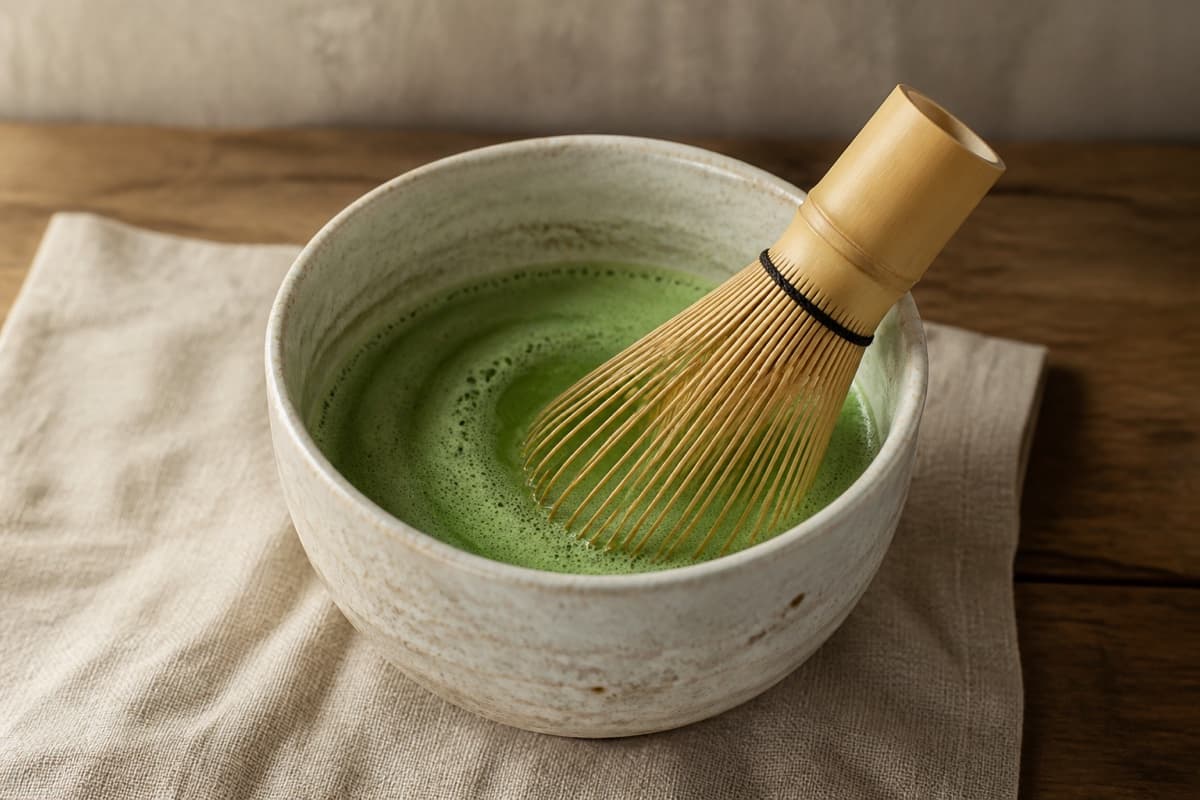
Gentle sweetness
Mild bitterness
Creamy mouthfeel
Fresh green character
Deeper savoury umami
You do not need to understand umami before drinking matcha. You may begin noticing it naturally as your palate becomes familiar with the taste.
Your first sip does not have to decide your entire matcha story.
The ritual
The traditional preparation is beautifully simple.
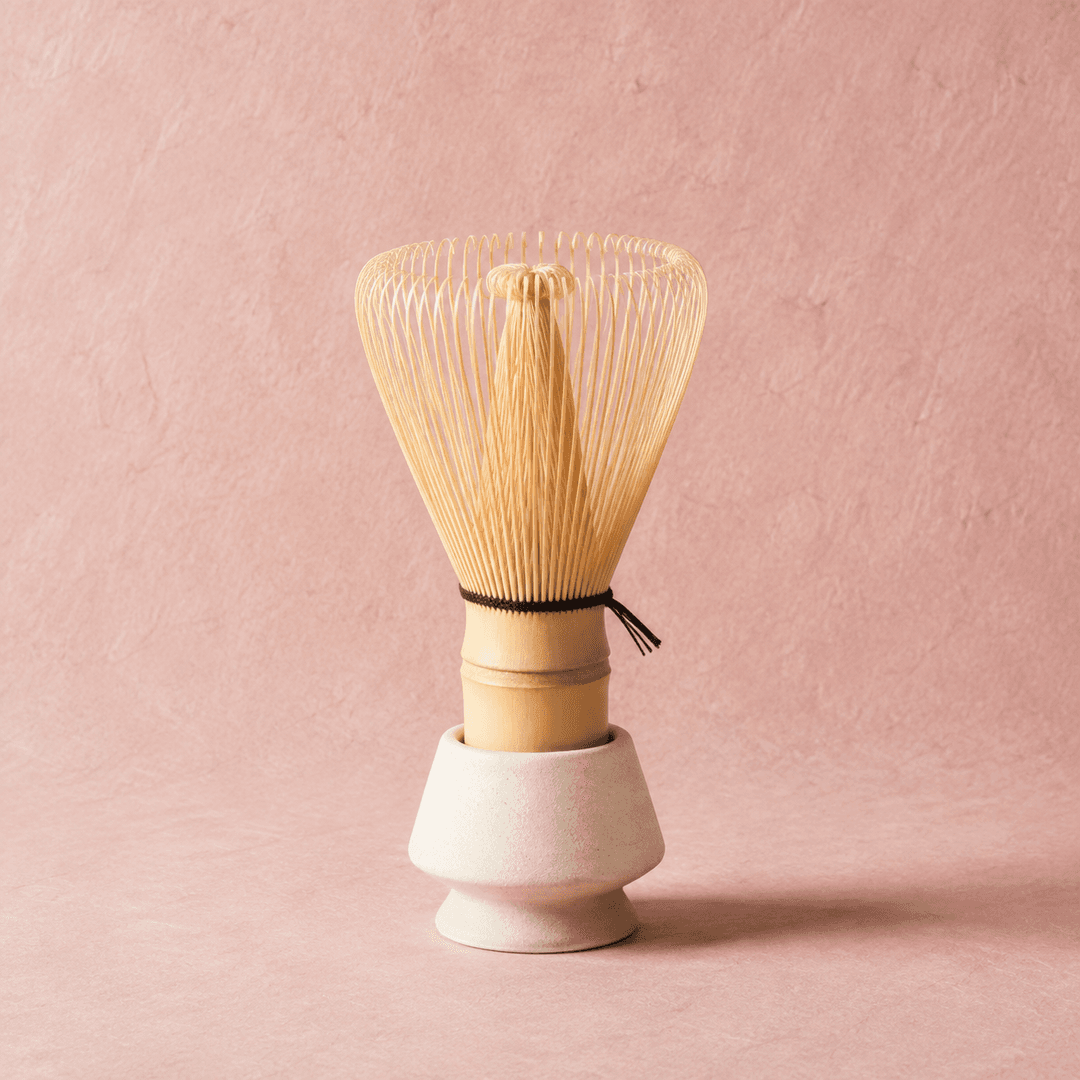
Matcha. Water. Bowl. Whisk.
Traditionally, matcha is prepared using:
That is all. No caramel. No vanilla syrup. No whipped cream. No five spoons of sugar.
The powder goes into the bowl.
Water is added.
The matcha is whisked.
Then it is enjoyed.
Simple ingredients. Careful preparation. A few quiet minutes.
Do you have to drink it traditionally?
No. This is 2026.
Drink matcha in the way you genuinely enjoy it.
The traditional way: matcha whisked straight into hot water in a bowl. Nothing else added.
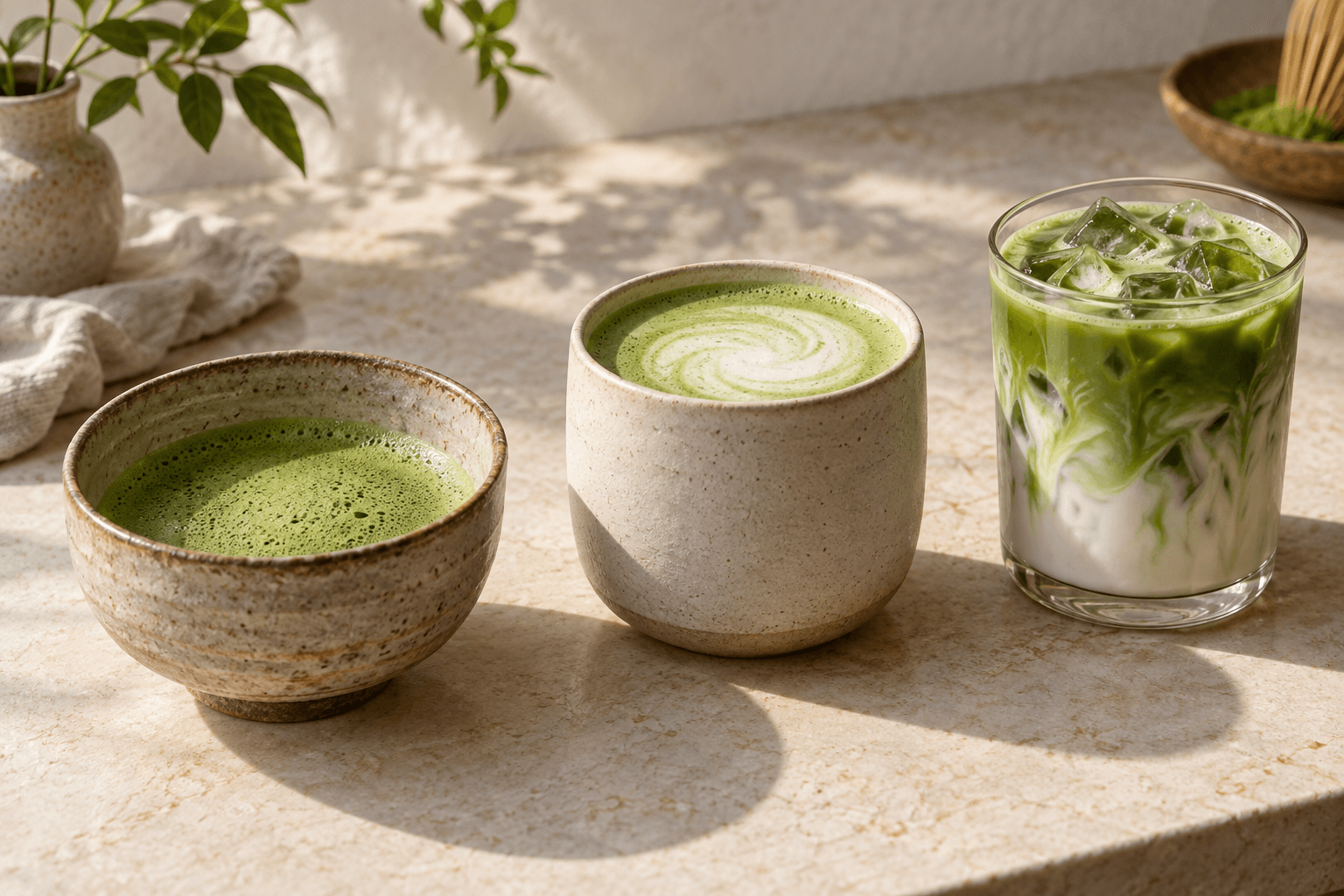
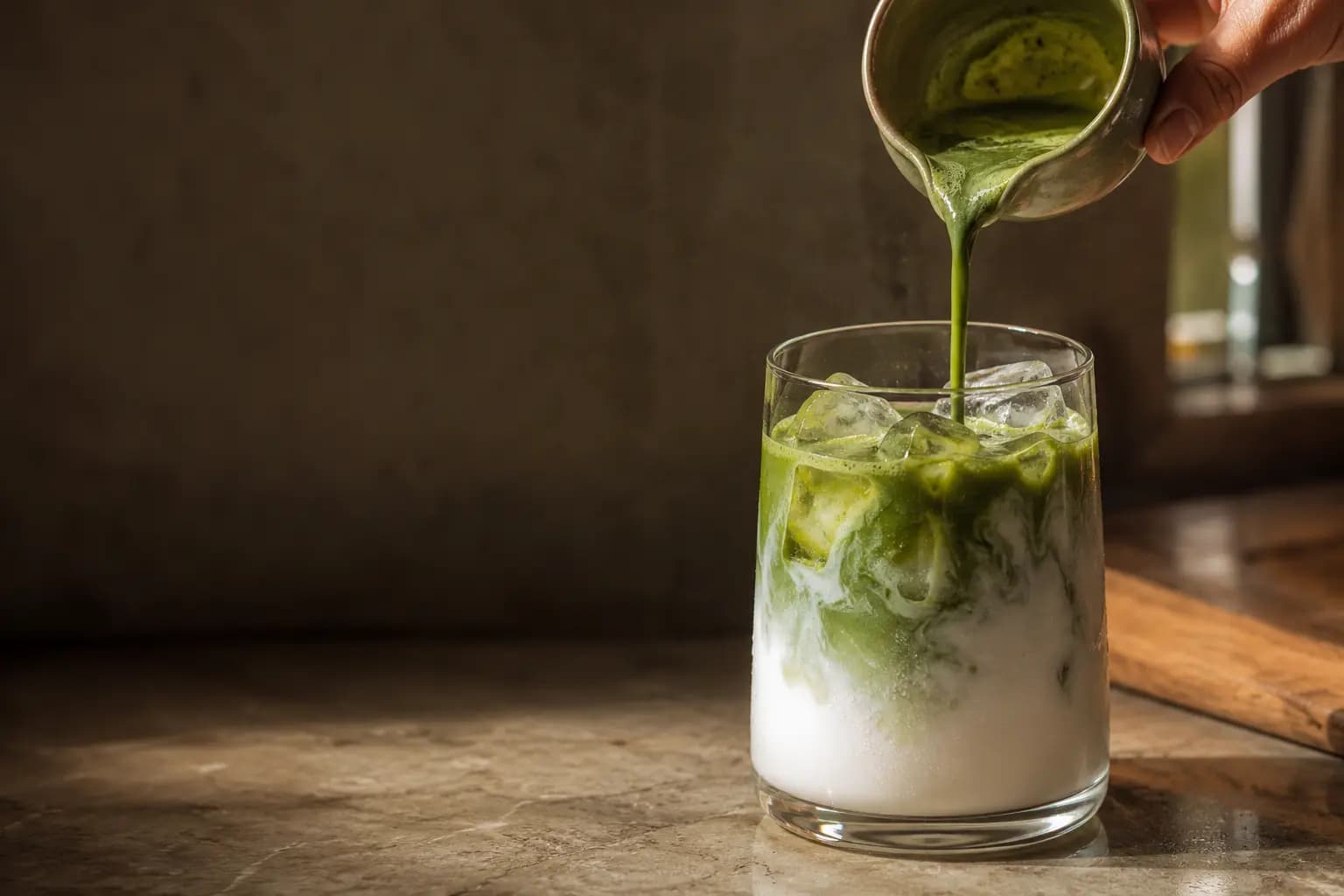
Experiment with the amount of matcha, water and milk until you find what works for you.
We have only one request:
Before adding sugar, try it once without sugar.
Just once. Taste the matcha first. Maybe you will love it. Maybe you will hate it. Maybe you will think:
“Okay…I need three more attempts.” 😄
That is completely fine.
Honestly
And please don't force yourself to like it.
Not for everyone. And that's OK.
The internet may say matcha is cool. That does not mean you have to pretend you enjoy it.
If you do not like it, tell us. Seriously.
We want the honest answer.
We are learning too. Understanding why people enjoy matcha—and why some do not—helps us make SUKÖ better.
From ritual to SUKÖ
Somehow, this old ritual found three software guys in India.
Something began hundreds of years ago.
Monks made tea part of their daily practice.
Tea became part of Japanese culture.
People transformed its preparation into a quiet ritual.
And centuries later, three software guys in India discovered the same drink because they were tired of drinking too much sugary tea.
A little unexpected, isn't it?
Zen practice
Japanese tea culture
Three software founders in India
Maybe this is what we like most about matcha.
Yes, matcha contains caffeine.
Yes, it naturally contains L-theanine.
Yes, it contains tea catechins, including EGCG.
And yes, researchers continue studying it.
But forget all those terms for one moment. There is something much simpler here.
You stop.
Take your bowl.
Add the matcha.
Pour in the water.
Whisk it.
Watch it become smooth, green and creamy.
Take a sip.
And for those few minutes…
You are not rushing anywhere.
No meeting.
No notification.
No deadline.
Just you and your drink.
And then you return to your day.
Perhaps that is why something so old can still feel useful today.