
Versus6 min read
Matcha vs coffee: what really happens when you switch
Same desk. Same deadline. Two very different cups. Here's what changes in your caffeine, your energy, your taste buds and your wallet.
Quick answer
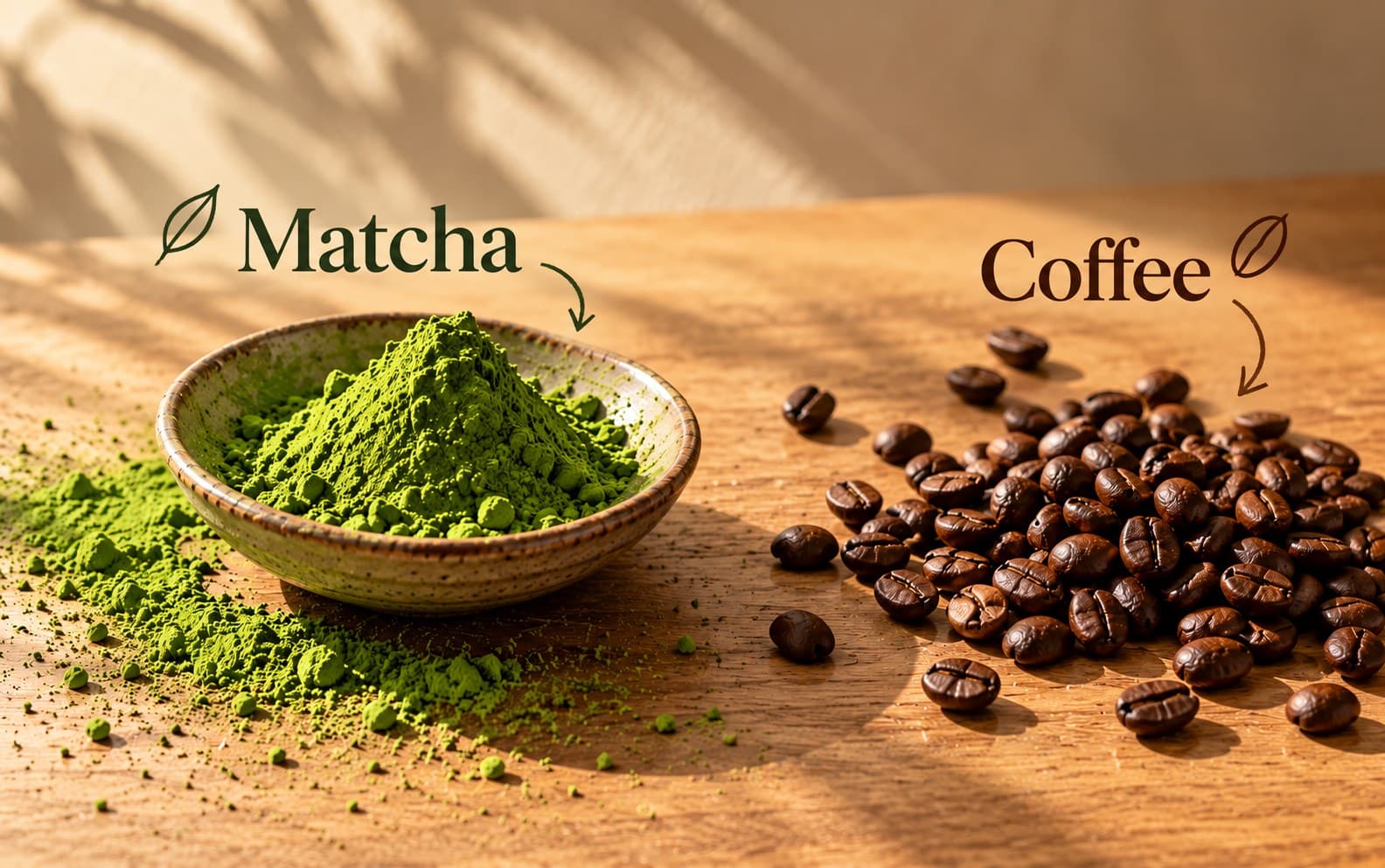
A cup of matcha gives you real caffeine, about the same as an espresso shot (roughly 40–90 mg per 2 g cup), enough to wake you up without the jittery spike of a big mug of coffee (about 96 mg). What makes it different is how it feels: many people describe a calmer, steadier focus, often credited to matcha's L-theanine, though research is still early. It tastes fresh, savoury and gently sweet, and at about 2 g per cup it costs far less than it looks.
Key takeaways
- Matcha has real caffeine: about an espresso shot's worth per cup.
- Coffee is a sprint; matcha drinkers describe a calmer, steadier focus.
- Never use boiling water: 75–80°C keeps matcha smooth, not bitter.
- At 2 g per cup, a 30 g tin makes about 15 cups.
It's 3:47 pm.
Your second coffee wore off an hour ago. Your to-do list didn't. You're eyeing a third cup, already knowing how 1 am is going to feel.
Now picture the same afternoon, with one change. A bowl of bright, almost glowing green. It smells like fresh-cut grass after rain. The first sip is smooth and savoury, then quietly sweet. No jolt. No crash at 6. Just a calm, steady okay, let's do this.
That's the promise people make about matcha. We wanted to know how much of it holds up, so we put it in the ring with India's favourite wake-up call. Four rounds. No hype. Just what actually changes when you swap the cup.
Round 1: The caffeine (it's not what you think)
First, a surprise for anyone who thinks matcha is a gentle herbal tea: it has real caffeine. With most green tea you steep the leaves and throw them away. With matcha, the leaf is stone-ground into powder and you drink all of it.
A regular 240 ml cup of brewed coffee carries about 96 mg of caffeine, and a 30 ml espresso shot about 63 mg [1]. Matcha comes in at roughly 19–44 mg per gram depending on the grade [2]. A typical cup uses 2 g, which puts it around 40–90 mg.
So matcha isn't the weak option. It sits right around an espresso shot. The real difference isn't how much caffeine. It's how it feels.
| Compare | Matcha (2 g) | Brewed coffee (240 ml) | Espresso (30 ml) |
|---|---|---|---|
| Caffeine | About 40–90 mg | About 96 mg | About 63 mg |
| You drink | The whole tea leaf, ground | Water brewed through beans | Concentrated coffee |
| Tastes | Fresh, savoury, gently sweet | Roasted, bitter, bold | Intense, roasted |
| Best as | Whisked, latte or iced | Black or with milk | Straight or in milk |
Round 2: The feeling (sprint vs long walk)
Coffee is a sprint. It kicks in fast, takes you up hard, and for many people drops them off a cliff a few hours later.
Matcha drinkers describe something different: a slower rise and a steadier, clearer focus. People usually credit L-theanine, an amino acid that tea leaves make naturally, and which you swallow whole with matcha.
“Coffee shouts. Matcha hums.”
The science is interesting but honest-to-goodness early. In one small study, people who had caffeine together with L-theanine did better on a tricky attention task than with a placebo [3]. The amounts were higher than one cup of matcha gives you, so take it as a clue, not a guarantee.
The best test is your own. Which brings us to the most fun round.
Round 3: The taste (no, it's not grass water)
If your only matcha was a dull, bitter café latte, forget it. That was probably old powder, or water that was too hot.
Good matcha is vivid. It smells green and fresh. The first sip has umami, that deep savoury note you know from a good broth, and then a soft natural sweetness that lingers. Whisked with milk and a little ice, it turns into the kind of drink you look forward to all morning.
Round 4: The price (the plot twist)
Matcha looks expensive when you see the tin. Then you do the maths. You only need about 2 g a cup, so one tin goes a lot further than you'd expect. Slide to your usual scoop:
Calculator
What your cup really costs
Live prices from our shop.
Based on ₹799 for 30 g. Your scoop may vary.
That's a café-quality cup at home, for a fraction of what a café latte costs, without the queue.
So, which matcha matches your coffee habit?
Quick quiz
Two taps to your matcha
Tell us how you drink coffee today and we'll match you.
New to making matcha? Our 2-minute guide shows exactly how, hot or iced.
The 14-day switch
You don't have to break up with coffee. Just try this:
- Days 1–7: keep your morning coffee, but make your 3:47 pm cup a matcha latte. Notice how you feel at 6.
- Days 8–14: flip it. Matcha in the morning, coffee only on the days you really want one.
- Day 15: decide for yourself. Most people who try it keep at least one green cup a day.
The verdict
Coffee isn't the villain here. It's fast, bold and familiar. But if you've ever wished your energy came without the jitters and the 6 pm slump, matcha deserves one honest week.
Keep your coffee. Just make room for one green cup.
Not sure which one? Taste both
FOR FINDING YOUR MATCHA
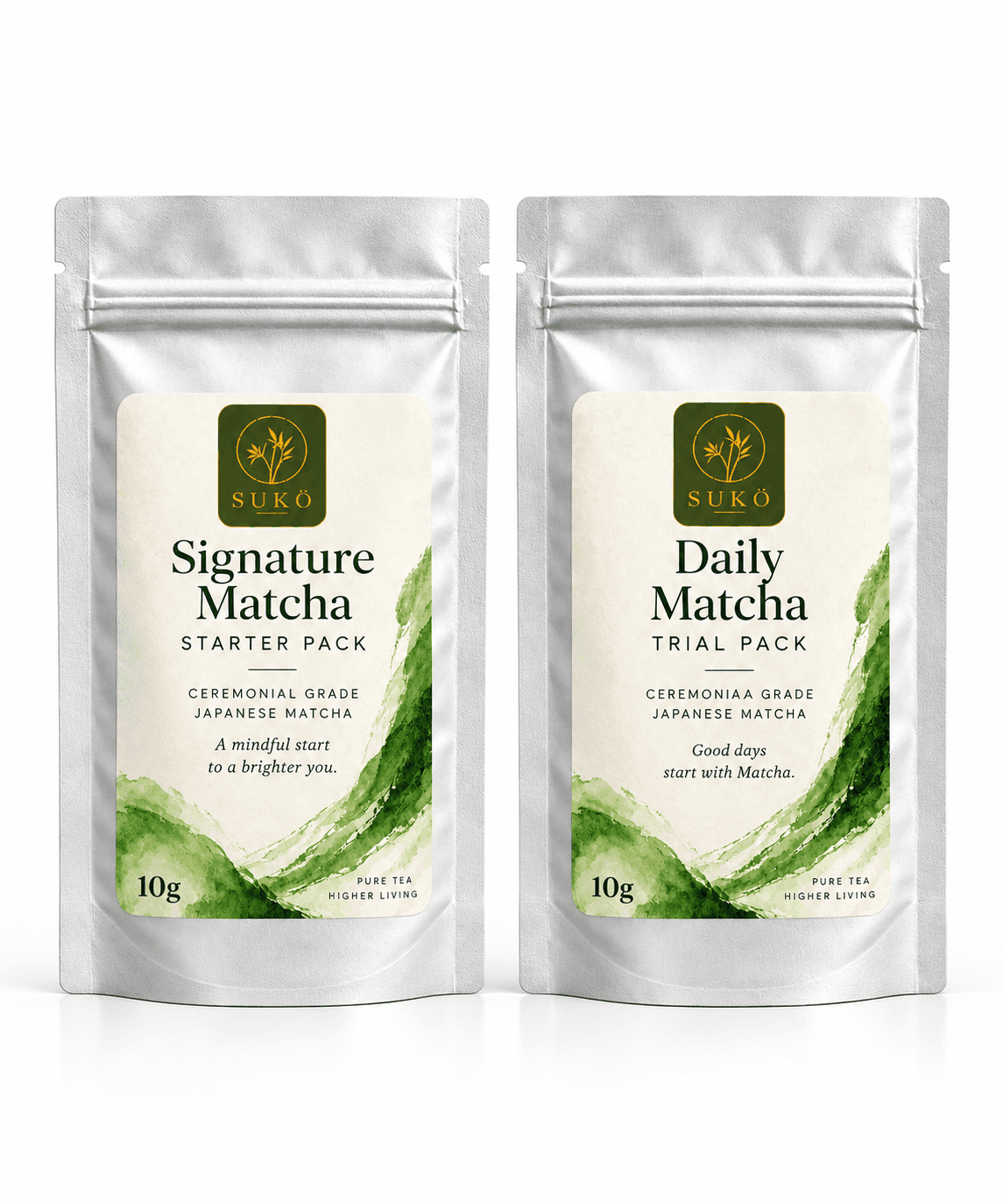
Suko Matcha Duo Trial Pack · 20g
10 g of Signature and 10 g of Daily, enough for about 10 cups, so you can find your favourite before choosing a full tin.
Tomorrow at 3:47 pm, try the green one.
Questions people ask
Does matcha have more caffeine than coffee?
A cup of matcha has about as much caffeine as an espresso shot: roughly 40–90 mg per 2 g cup, compared with about 96 mg in a big 240 ml mug of brewed coffee. That's enough to properly wake you up, and many people find it lands more gently. Want it stronger? Simply add a little more matcha.
Will matcha keep me awake at night?
It can, because it contains caffeine. If you are sensitive, have your last cup by early afternoon, just as you would with coffee.
Can I drink matcha every day?
Many people enjoy a cup or two a day. Keep your total caffeine from all drinks within about 400 mg a day, the amount health authorities consider fine for most healthy adults. If you are pregnant or on medication, check with your doctor.
Can I mix matcha and coffee?
Yes. A 'dirty matcha' is a matcha latte with a shot of espresso on top. It's delicious, just remember you're adding up both caffeine sources.
Do I need a bamboo whisk?
It makes the smoothest foam, but you can start with a small milk frother or by shaking matcha and warm water in a sealed jar.
Sources
- Caffeine content for coffee, tea, soda and more · Mayo Clinic
- Does matcha have caffeine? · Medical News Today
- The combined effects of L-theanine and caffeine on cognitive performance and mood (Owen et al., 2008) · Nutritional Neuroscience
Shop this article
Keep reading
Explore the Journal Matcha 1013 min read
Why is matcha trending now? 5 reasons India can't stop drinking green
Searches for “how to make matcha” are up about 1,300% in India. Here's what's really behind the green wave, and why it's sticking.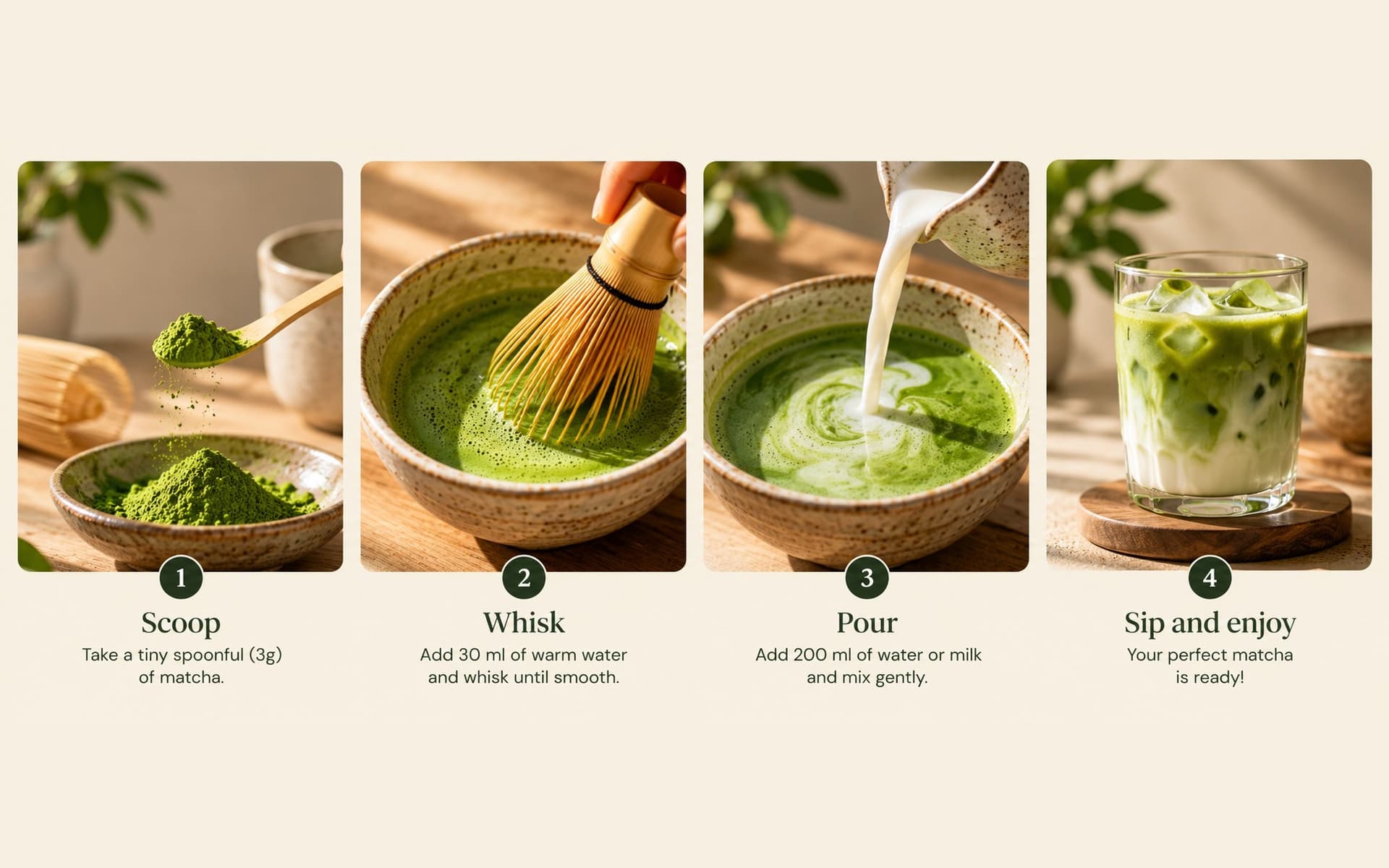 Brewing3 min read