Guide3 min read
Why Samurai Drank Matcha: The Warrior's Tea Ritual
Long before matcha lattes, Japan's warrior class made a ritual of whisked green tea. How matcha became the drink of samurai and warlords, and why it still works today.
Quick answer
Matcha came to Japan with Zen monks in the 12th century, and the samurai class quickly adopted it. Warlords like Oda Nobunaga and Toyotomi Hideyoshi held tea gatherings, even in military camps, and valued the ritual for calm and clear thinking. Legend has it that warriors drank matcha before battle for steady focus.
Key takeaways
- Powdered green tea reached Japan around 1191 with the Zen monk Eisai.
- The samurai class embraced tea, and the tea ceremony grew up around warrior culture.
- Tea master Sen no Rikyū served the most powerful warlords of his age.
- Hideyoshi held tea gatherings in his camp during the siege of Odawara (1590).
- Matcha naturally contains caffeine along with L-theanine, an amino acid found in tea.
From Zen temples to warrior halls
In 1191, the Zen monk Eisai returned to Japan from China with tea seeds and a new way of drinking tea: grinding the leaves to a fine powder and whisking it with hot water. Monks drank it to stay alert and clear-headed through long hours of meditation.
Eisai later wrote one of Japan's first books on tea, praising it as a way to care for body and mind. Japan's records even note that he served tea to the shogun Minamoto no Sanetomo when the shogun was feeling unwell. The warrior government had met matcha, and it never looked back.
The tea of samurai and warlords
Over the next centuries, the samurai class made tea their own. Tea gatherings became a place to show taste, build alliances and, just as importantly, slow down.
The ritual reached its peak with the tea master Sen no Rikyū, who served the two most powerful men of 16th-century Japan, Oda Nobunaga and Toyotomi Hideyoshi. Rikyū shaped the tea ceremony we know today: simple rooms, quiet attention, and every guest treated the same. Samurai entered his tea rooms through a small, low doorway, bowing as they came in, and left their swords outside.
Tea before battle
Did samurai really drink matcha before going to war? Legend says yes, and history gives a few clues. During the long siege of Odawara in 1590, Hideyoshi brought Rikyū along and held tea gatherings in his camp, in the middle of a military campaign.
For a warrior, the appeal is easy to see. A bowl of matcha gives an alert, steady feeling, and the ritual itself (warming the bowl, whisking, sipping slowly) is a few minutes of calm before a hard day.
Why it still works today
Matcha is the whole tea leaf, stone-ground into powder, so you drink the leaf itself rather than an infusion. It naturally contains caffeine along with L-theanine, an amino acid found in tea that has been studied for its role in calm, focused alertness. That combination is a big part of why so many people describe matcha's energy as smoother than coffee.
You don't need a battlefield to borrow the samurai's ritual. Whisk a bowl in the morning, take two quiet minutes, and start your day with a clear head.
Start your own ritual
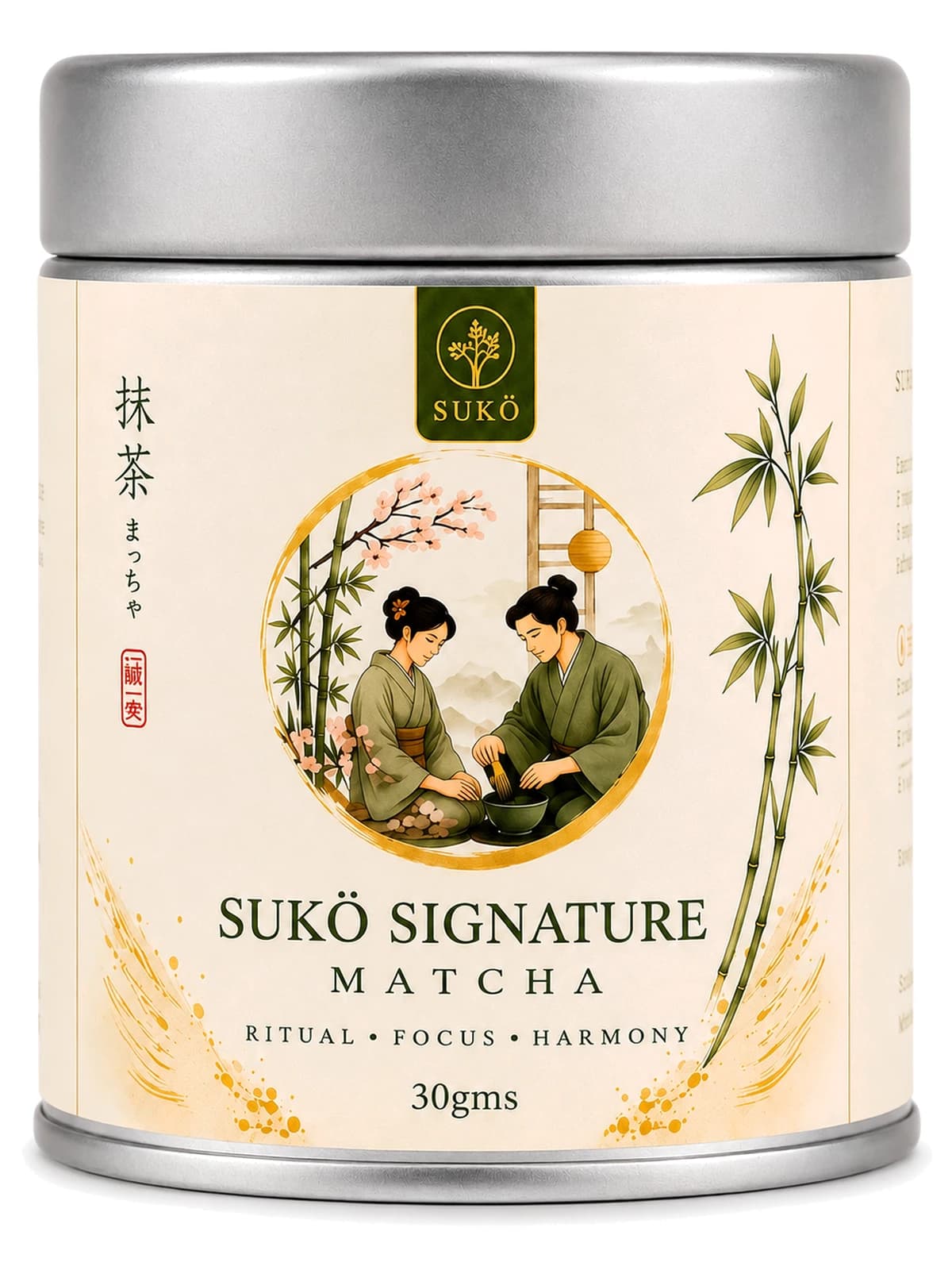
Our Signature Matcha is first-harvest, ceremonial-grade matcha from Shizuoka, Japan: shade-grown, stone-milled, and smooth enough to enjoy with just water, the way it was drunk for centuries.
Start your ritual
OUR FINEST MATCHA
Suko Signature Matcha · 30g
First-harvest, ceremonial-grade matcha from Shizuoka. Smooth enough to enjoy with just water.
Questions people ask
Did samurai really drink matcha?
Yes. The samurai class adopted powdered green tea after it arrived with Zen monks, and the tea ceremony developed largely within warrior culture. Great warlords like Oda Nobunaga and Toyotomi Hideyoshi were known for their tea gatherings.
Did samurai drink matcha before battle?
It's a popular legend. We know Hideyoshi held tea gatherings in his camp during the siege of Odawara in 1590, so tea was certainly part of life on campaign.
What gives matcha its smooth energy?
Matcha contains natural caffeine along with L-theanine, an amino acid found in tea. Many people find the combination gives a calmer, steadier feeling than coffee.
Sources
- Eisai · Wikipedia
- Sen no Rikyū · Wikipedia
- Siege of Odawara (1590) · Wikipedia
- Japanese tea ceremony · Wikipedia
Shop this article
Keep reading
Explore the Journal Buying guide5 min read
Best Matcha in India: How to Choose (A Simple Buying Guide)
Ceremonial or culinary? Why do prices vary so much? Here's how to choose good matcha in India, what to check on the pack, and how to test it at home. Origin & craft5 min read
What Is First Harvest Matcha? From Shaded Spring Leaves to Your Cup
Shaded fields, spring's youngest leaves and slow stone mills: how first harvest (ichibancha) matcha is grown, and why it tastes so much sweeter and greener. Matcha 1013 min read